Miraeyeon Clinic
- HOME
- Miraeyeon Clinic
- Infertility Clinic
Infertility Clinic
Fertility Preservation
Before undergoing treatments such as chemotherapy, radiotherapy, or surgery that may impair ovarian function,
or in cases where premature ovarian failure and decline of ovarian function are expected, this refers to medical methods to preserve future
fertility in situations such as when pregnancy must be postponed for personal reasons.
The need for fertility preservation can largely be divided into medical reasons and social reasons.
01Fertility preservation for medical reasons Cases where it is necessary

-
Cancer
About 80% of patients diagnosed with cancer can survive after treatment. However, most chemotherapy and radiotherapy treatments cause a decline in reproductive function.
Therefore, reproductive-age cancer patients scheduled for chemotherapy may consider fertility preservation in consultation with their physician.

-
Benign ovarian tumor
If a benign ovarian tumor is large or occurs bilaterally, ovarian function may decline after tumor removal surgery.
Undergoing fertility preservation procedures before surgery may help with future pregnancy attempts.

-
Premature ovarian failure
If ovarian function is severely reduced at an early age due to genetic or immunological reasons, it is advisable to consider fertility preservation before it worsens further.
02Fertility preservation for social reasons Cases where it is necessary
In modern society, the age of marriage is increasing, and more women consider postponing pregnancy after marriage for reasons such as education, occupation, or career.
However, female fertility begins to decline after age 35 and decreases sharply after age 40. Therefore, rather than postponing pregnancy without a plan, it is advisable to consider fertility preservation through consultation with a physician.
03Methods of fertility preservation
-
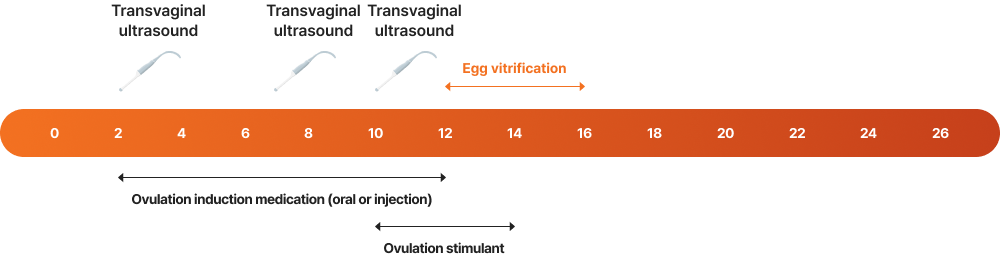
If unmarriedIn the case of unmarried women, after controlled ovarian stimulation, 10–20 oocytes are retrieved under sedation, vitrified (cryopreserved), and stored long-term in a nitrogen tank.

-
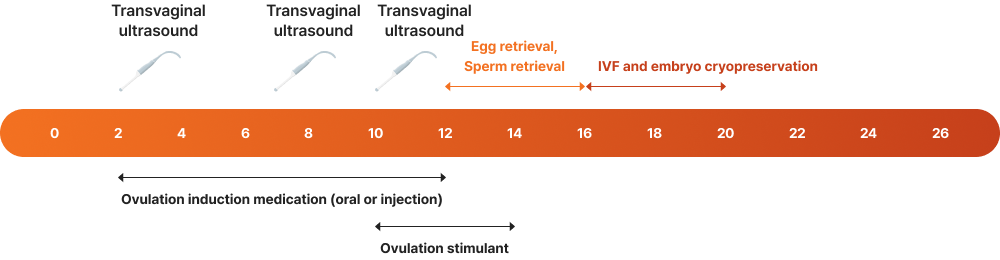
If marriedIn the case of married women, after controlled ovarian stimulation, multiple oocytes are retrieved under sedation, fertilized with the husband’s sperm in vitro, and the embryos are vitrified and stored long-term in a nitrogen tank.
-
Miraeyeon Women’s Clinic?at our clinic, when postponing pregnancy for personal or social reasons, or considering fertility preservation for medical reasons, we are prepared to provide all treatments including oocyte cryopreservation, embryo cryopreservation, and later attempts at pregnancy using frozen oocytes and embryos. Do not hesitate to consult your doctor.